

NeighborWorks® America Network’s New Affordable Rental Construction Grows 70% Over Nearly a Decade
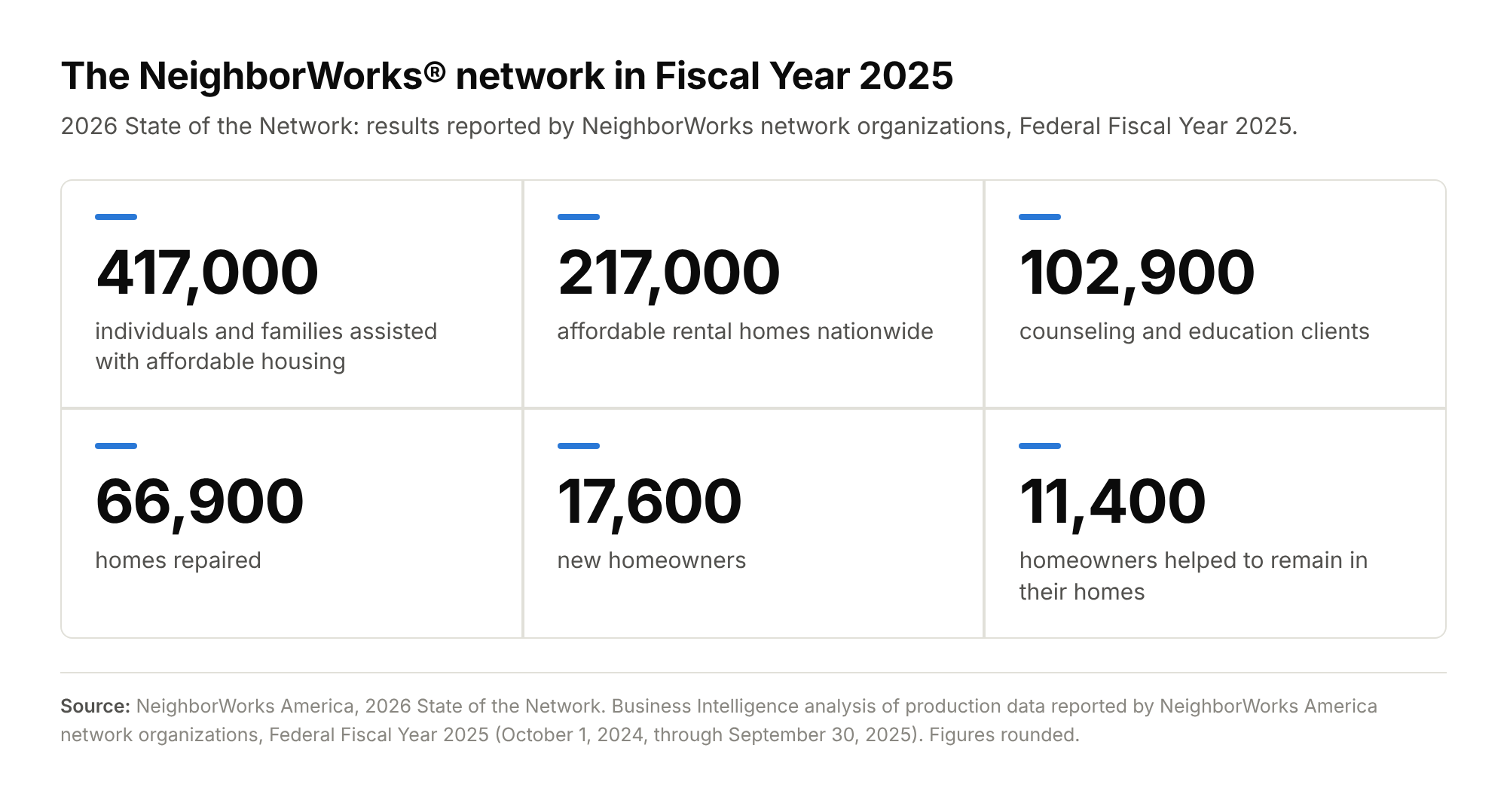
Fig. 1: Network Impact
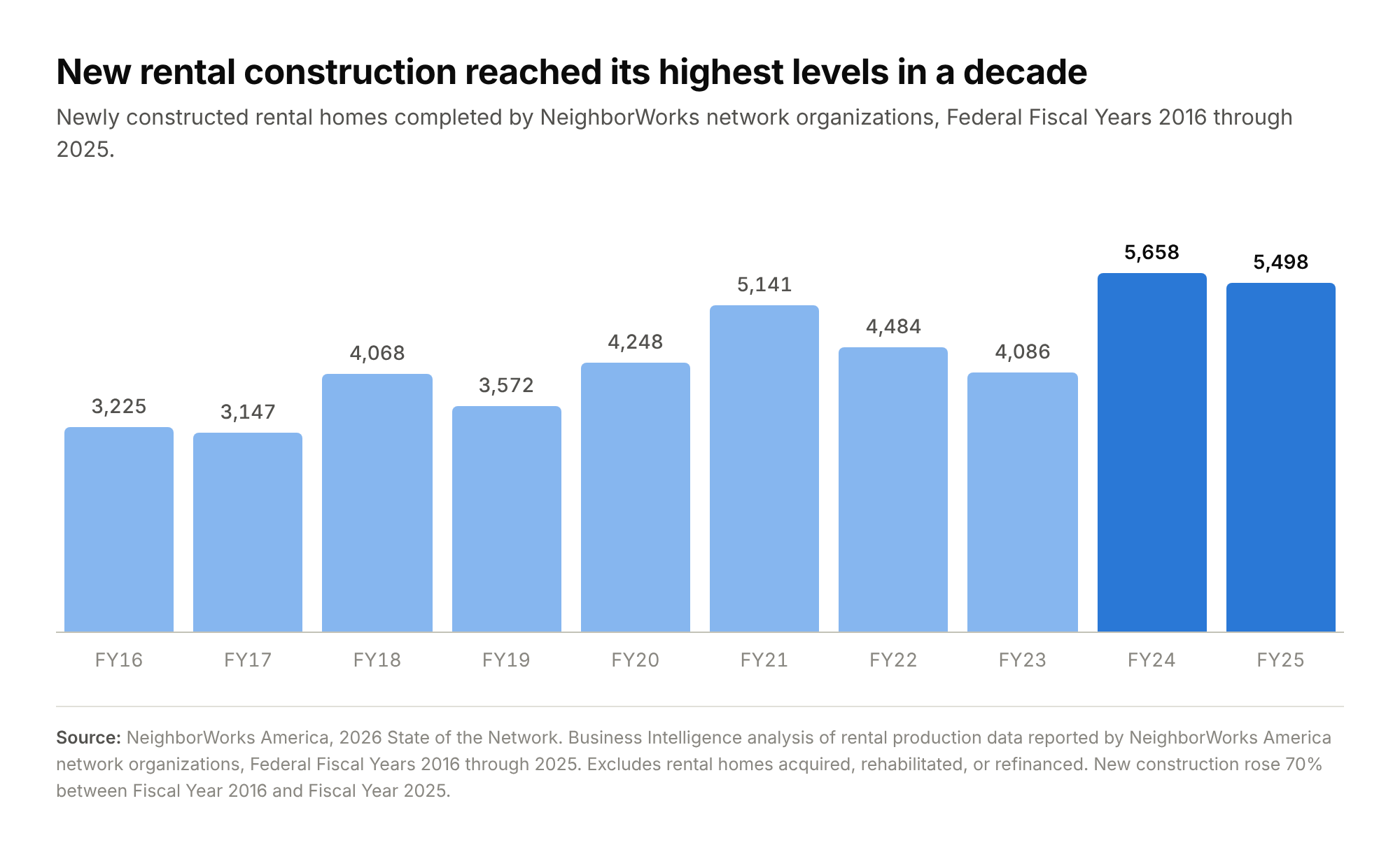
Fig. 2: Rental Construction
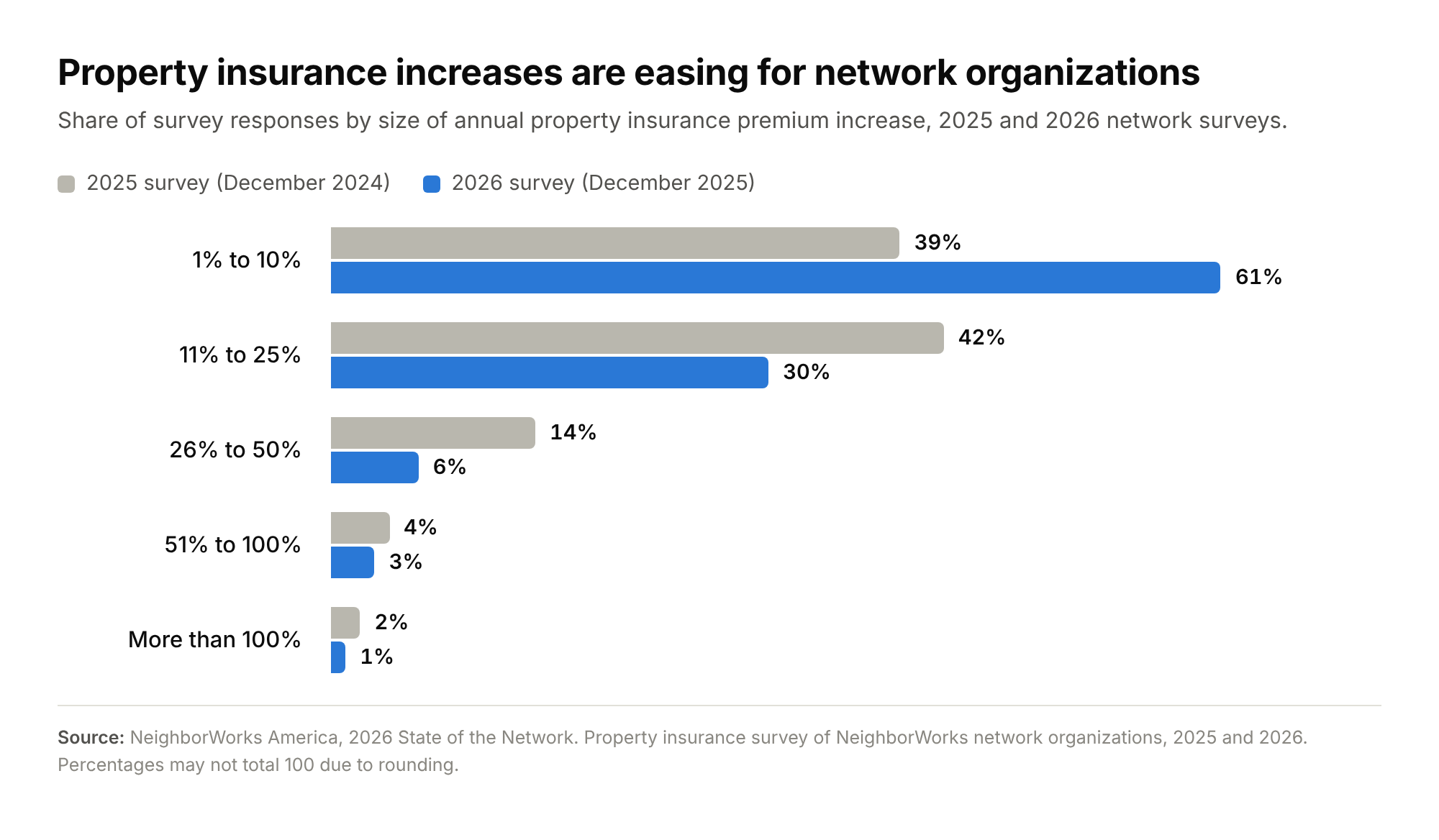
Fig. 3: Insurance Costs
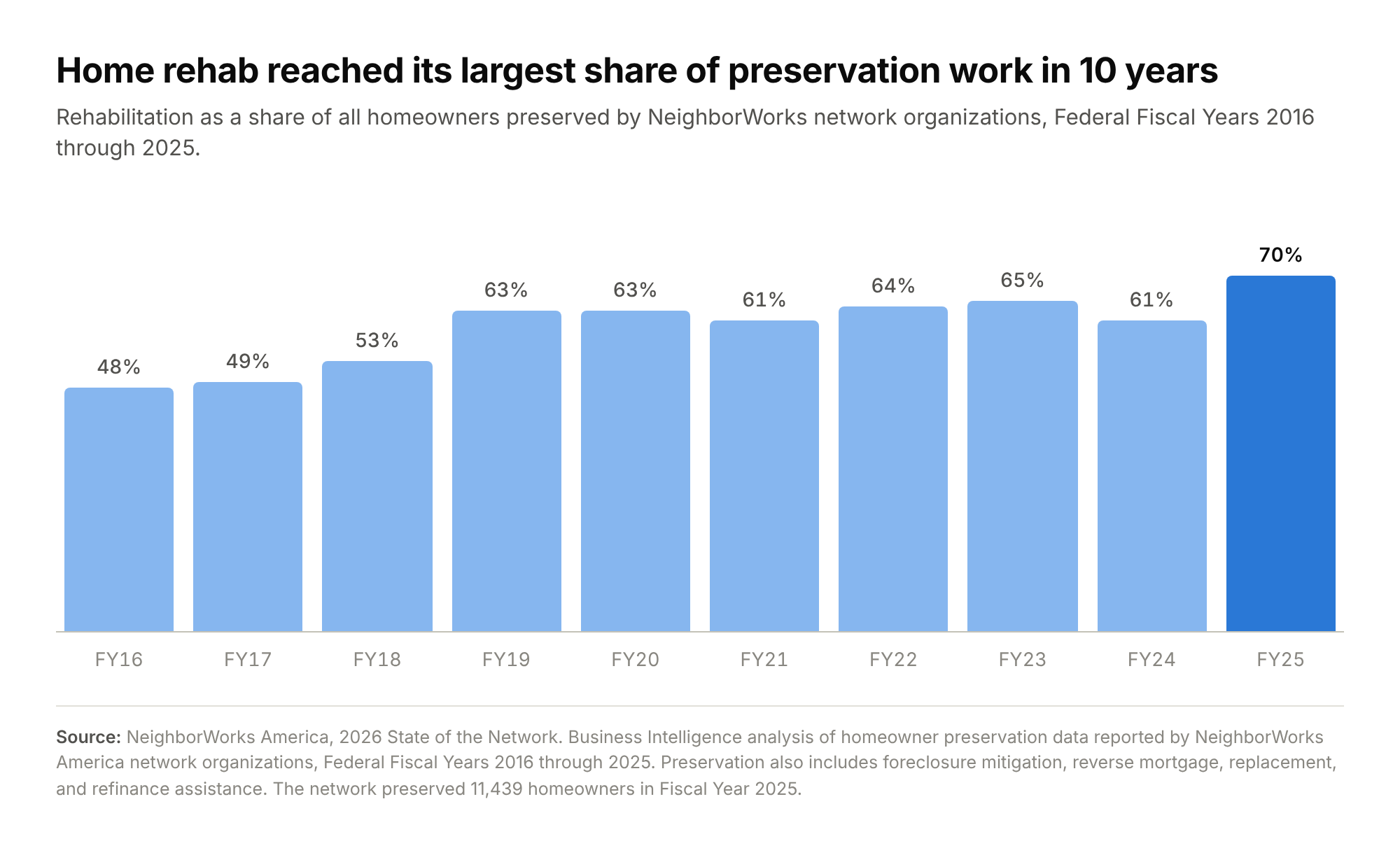
Fig. 4: Home Preservation
NeighborWorks' 2026 State of the Network data show more than 45,000 homes in the development pipeline and 417,000 families and individuals served in FY25.
With more than 45,000 homes in the pipeline, our network is nowhere near done. That is what local organizations can deliver when they work together as a national network.”
WASHINGTON, DC, UNITED STATES, October 29, 2026 /EINPresswire.com/ -- In Federal Fiscal Year 2025 (FY25), organizations in the nationwide NeighborWorks® America network built 5,498 new affordable rental homes, 70% more than in FY16. Together with 5,658 in FY24, those are the network’s two highest annual totals for new rental construction in the last 10 years. The results show nearly 250 community-based nonprofits expanding the supply of affordable homes at scale, building, acquiring, rehabilitating, and financing homes, with more than 45,000 more in the pipeline. — Marietta Rodriguez, President & CEO of NeighborWorks® America
Network organizations also help people move forward at every stage of the housing journey. In FY25, they served 417,000 families and individuals, from counseling and first-time homeownership to home repairs and help staying in their homes.
That work meets a housing need felt in every part of the country. The National Low Income Housing Coalition’s The Gap 2026 report estimates a shortage of 7.2 million affordable and available rental homes for extremely low-income households and found a shortage in every state and major metropolitan area. Moving in is its own hurdle: According to Harvard University’s Joint Center for Housing Studies, the median rent and security deposit together come to $2,197, while the median renter household has $1,810 in cash savings. Network organizations work to close those gaps in their own communities, and together, their efforts have a significant national impact.
The findings are part of NeighborWorks America’s 2026 State of the Network data, which cover FY25. They draw on production data that NeighborWorks network organizations report to NeighborWorks America each year, analyzed by NeighborWorks America’s Business Intelligence team, along with the network’s annual property insurance survey. Michael Butchko, Vice President of Business Intelligence, first presented the results to network executives and board members at the NeighborWorks Executive Symposium in Washington, D.C.
“Housing needs do not slow down, so our organizations do not either,” said Marietta Rodriguez, President & CEO, NeighborWorks America. “In a demanding market, local nonprofits in our network had their two strongest years of new rental construction in a decade, helped 17,600 families buy a home, and helped 11,400 more stay in the homes they already own. With more than 45,000 homes in the pipeline, our network is nowhere near done. That is what local organizations can deliver when they work together as a national network.”
Expanding the supply of affordable homes at scale
In FY25, network organizations supported 10,375 rental homes. Of those, 5,498 were newly constructed, and the rest were existing homes they acquired, rehabilitated, or refinanced. The network includes 217,000 affordable rental homes.
As many nonprofits pulled back, the NeighborWorks network kept building. The Center for Effective Philanthropy found that 44% of nonprofits were reducing or considering reducing programs or services in response to funding cuts. Across the NeighborWorks network, more than 45,000 homes are in the acquisition and construction pipeline, including more than 39,000 newly built homes. New builds account for 86% of planned rental homes and 94% of planned for-sale homes. California, Ohio, and Massachusetts lead in planned housing, while the largest single project, in Colorado, will add 616 homes.
Operating costs that affect those homes are also stabilizing. In the network’s most recent property insurance survey, 61% of responses reported premium increases of 10% or less from the previous year, up from 39% a year earlier. The share reporting increases of more than 25% fell by half, from 20% to 10%. Even so, 85% of organizations still reported higher renewal costs than the previous year.
Helping people move forward at every stage of the housing journey
From counseling and first-time homeownership to home repairs and preservation, network organizations help people find, afford, and remain in their homes. In FY25, that included:
• Counseling and education: 102,900 clients.
• First-time homeownership: 17,600 new homeowners, up 8% from FY24. Of FY25 network homebuyers, 94% were first-time homebuyers, as NeighborWorks America reported Oct. 19.
• Home repairs: 66,900 homes repaired.
• Preservation: 11,400 homeowners helped to remain in their homes. Home rehabilitation made up 70% of that work, its largest share in 10 years, up from 48% in FY16.
Local organizations, national impact
Nearly 250 community-based organizations in every state, the District of Columbia, Puerto Rico, and on Native lands combine local expertise with NeighborWorks America’s support to deliver measurable results. Many work well beyond housing: Of the network’s 248 member organizations, 82 are Community Development Financial Institutions (CDFIs), 121 provide health services, 96 provide education services, and 80 run workforce development programs. In FY25, for every dollar received from Congress, the NeighborWorks network and NeighborWorks America attracted an additional $74 of investment from other sources.
“Every network organization reports this data to us every year, so we can see how local nonprofits respond as conditions change,” said Butchko. “What stands out is momentum. The last two years were the network’s strongest for new rental construction in a decade, the pipeline is overwhelmingly new construction, and insurance increases, one of the hardest costs to plan around, are easing.”
The 2026 State of the Network data also includes the network homebuyer findings NeighborWorks America released on Oct. 19, 2026, and is part of its ongoing efforts to share new data and insights on the work of its network. A full list of organizations in the NeighborWorks network is available here.
About the data
The 2026 State of the Network data reflects production data reported by NeighborWorks network organizations for federal fiscal years 2016 through 2025. FY2025 covers October 1, 2024, through Sept. 30, 2025. Pipeline figures reflect acquisition and construction projects reported by network organizations as of FY2025. Insurance figures are from NeighborWorks America’s property insurance surveys of network organizations, fielded in December 2024 and December 2025. The national rental shortage estimate is from the National Low Income Housing Coalition’s The Gap report. Rent, security deposit, and renter savings figures are from Harvard University’s Joint Center for Housing Studies (2026). Nonprofit funding response figures are from the Center for Effective Philanthropy.
About NeighborWorks America
For nearly 50 years, Neighborhood Reinvestment Corporation, a congressionally chartered national nonprofit known as NeighborWorks® America, has strived to make every community safer and more prosperous. Our network of excellence includes nearly 250 nonprofits in every state, the District of Columbia, Puerto Rico, and on Native lands. NeighborWorks offers grant funding, peer exchange, technical assistance, evaluation tools, and access to best-in-class training as the nation’s leading trainer for housing and community development professionals. NeighborWorks network organizations build homes and apartments, expanding the supply of affordable housing in every community; provide financial counseling and coaching that increases self-sufficiency; encourage resident leadership; and collaborate with local stakeholders in the areas of health, economic development, employment, and education. In Fiscal Year 2025, for every dollar received from Congress, the NeighborWorks network and NeighborWorks America attracted an additional $74 of investment from other sources. For more information, visit www.neighborworks.org.
Social Media
LinkedIn: https://www.linkedin.com/company/neighborworks
Instagram: https://www.instagram.com/neighborworks
Facebook: https://www.facebook.com/NeighborWorksAmerica
YouTube: https://www.youtube.com/user/NeighborWorksAmerica
TikTok: https://www.tiktok.com/@neighborworksamerica
X: https://x.com/neighborworks
Beau Hunter
NeighborWorks America
bhunter@nw.org | media@nw.org
Legal Disclaimer:
EIN Presswire provides this news content "as is" without warranty of any kind. We do not accept any responsibility or liability for the accuracy, content, images, videos, licenses, completeness, legality, or reliability of the information contained in this article. If you have any complaints or copyright issues related to this article, kindly contact the author above.
